
Islamabad – Major manufacturing and export-oriented sectors in Pakistan have strongly disputed the government’s assertions of recovery in large-scale manufacturing (LSM), cautioning that industrial activities are still contracting due to skyrocketing energy costs, sluggish demand, and burdensome taxation.
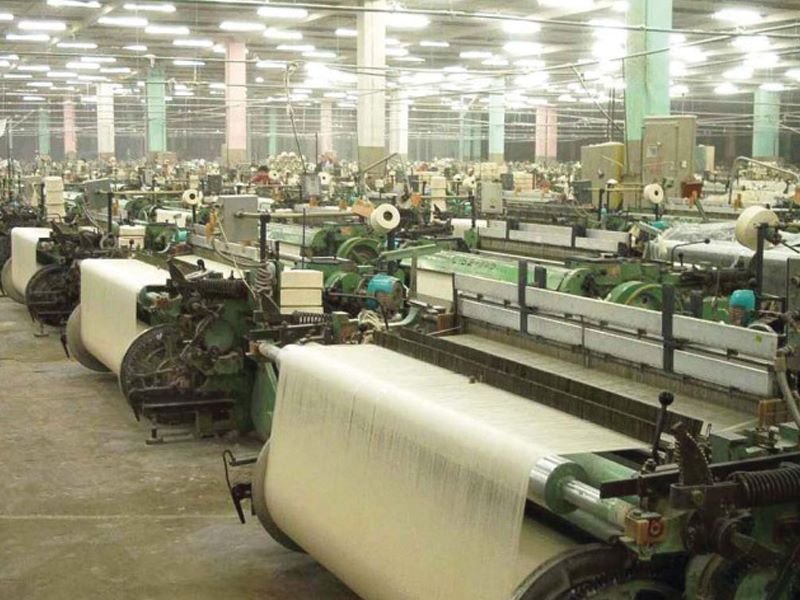
Industry representatives report that over 150 industrial units have shuttered in the past 18 months, with surviving factories running at merely 50% of capacity. The textile industry, Pakistan’s top export earner, is in severe distress. All Pakistan Textile Mills Association (APTMA) Chairman Kamran Arshad revealed that approximately 144-150 textile mills have closed, citing exorbitant gas and electricity rates, elevated interest rates, excessive taxes, and delayed refunds. These closures have slashed production, hampered exports, and led to widespread job losses.
The steel sector faces a similar downturn. Leaders highlight a drastic hike in per-ton taxation—from around Rs10,300 in 2019 to Rs37,000-42,000 in recent years—which has crushed demand, halved consumption, and paradoxically reduced government revenues by nearly 50%. Scrap imports have plummeted, lowering electricity usage and inflating capacity payments to Independent Power Producers (IPPs). Informal producers are flooding the market with low-quality steel, exacerbating issues.
In contrast, Bangladesh, with comparable capacity, produces far more steel (6.5 million tons vs Pakistan’s 3.8 million) through supportive policies like lower VAT, higher import protections, reduced corporate taxes, and affordable energy. Pakistani steel experts urge policy alignment to revive the sector, potentially boosting electricity consumption to 7 billion kWh annually and saving Rs60-70 billion in IPP payments.
Critics also condemn reduced tariff protections without tackling smuggling, tax evasion, and exemptions in former FATA/PATA regions, risking the collapse of local manufacturing.
Agriculture shows weakness too, with cotton output estimated at 6.85 million bales (down 3.3%), rice declining 3.2%, and maize 6.7%. Cement dispatches in November 2025 fell 3.47% year-on-year to 4.14 million tons, despite a 11.54% rise in the first five months of FY2025-26.
Without urgent reforms, industry warns of irreversible damage to jobs, revenues, and self-reliance.