
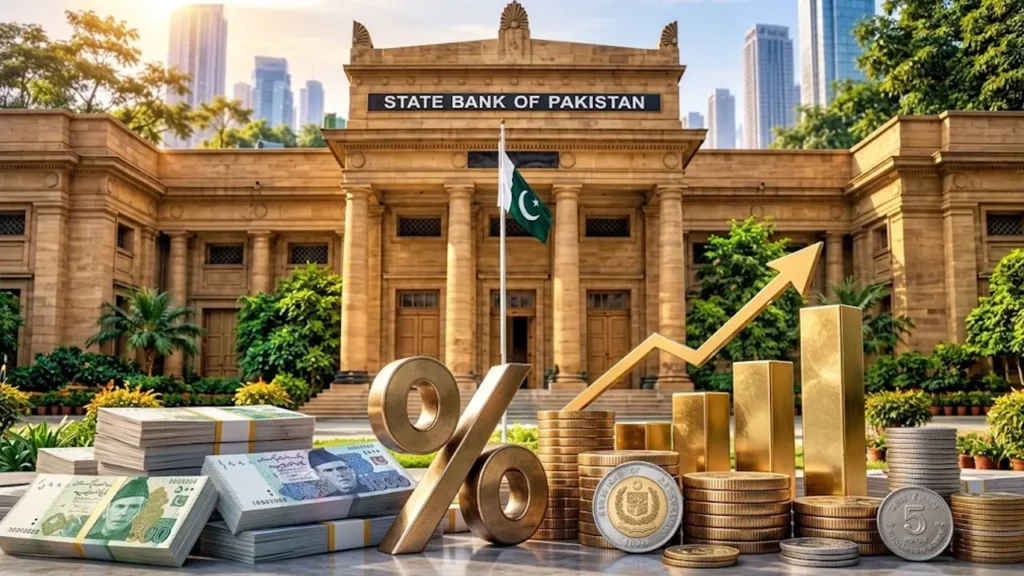
The State Bank of Pakistan’s Monetary Policy Committee (MPC) has raised the policy rate by 50 basis points to 12 percent, effective 27 October, as rising inflation and higher global energy prices increase pressure on the economic outlook. Nine of the committee’s ten members supported the decision.
The move comes amid the continuing conflict in the Middle East, which has pushed global energy prices higher and increased uncertainty over domestic inflation. The committee aims to keep inflation expectations anchored, limit second-round price pressures and bring inflation back within the target range of 5–7 percent.
Rising Inflation Drives Monetary Policy Decision
Pakistan’s consumer inflation reached 10.3 percent in September, exceeding expectations, while core inflation remained around 8.4 percent. Elevated energy and wheat prices have been the main drivers of inflation, and the outlook has deteriorated since the previous monetary policy meeting.
Although earlier monetary policy adjustments and fiscal discipline have helped contain inflationary pressures, the MPC considers further tightening necessary to maintain a positive real interest rate on a forward-looking basis.
The rate increase reflects concerns that continued pressure from energy and food prices could keep inflation elevated for longer. The committee is seeking to prevent these increases from feeding into broader prices and inflation expectations.
Economic Activity Shows Gradual Recovery
Despite inflationary challenges, economic activity is showing signs of a gradual recovery. Large-scale manufacturing grew 1.9 percent during July and August, while indicators such as cement sales, private-sector credit and nighttime lights point to improving economic momentum.
The MPC maintained its expectation that Pakistan’s gross domestic product (GDP) will grow between 3.5 and 4.5 percent during the current fiscal year.
However, sustaining this recovery will depend on the interaction between inflation, borrowing costs, domestic demand and external economic conditions. The higher policy rate could help contain inflationary pressures, while also influencing financing costs for businesses and consumers.
Foreign Exchange Reserves and External Position
Pakistan’s foreign exchange reserves remain relatively stable at around $21.5 billion, equivalent to approximately three months of imports. The country has also reached a staff-level agreement with the International Monetary Fund (IMF), providing support for its ongoing economic reform programme.
The current account recorded a deficit of $874 million during the first quarter. For the full fiscal year, the deficit is projected to remain between zero and 1 percent of GDP.
External stability will remain an important consideration for monetary policy, particularly as developments in the Middle East could affect energy import costs and Pakistan’s overall balance of payments.
Tax Collection and Private-Sector Credit
Fiscal and credit indicators offer some support to the economic outlook. The Federal Board of Revenue (FBR) recorded 7 percent growth in tax collection during the first quarter, exceeding its target by Rs33 billion.
Meanwhile, private-sector credit expanded by 14.1 percent year-on-year, reflecting growth across working capital, investment and consumer lending.
These trends suggest that economic financing and revenue mobilisation remain active. However, maintaining fiscal discipline and ensuring that credit supports sustainable economic activity will be important as the central bank seeks to bring inflation under control.
Inflation Risks and Economic Outlook
The MPC highlighted several risks that could influence the inflation outlook, including further escalation of the Middle East conflict, fluctuations in global commodity prices, changes in energy tariffs, wheat supply conditions and weather-related disruptions.
Any sustained increase in imported energy costs or domestic food prices could complicate efforts to return inflation to the 5–7 percent target range.
The committee stressed that continued fiscal discipline and structural reforms will be essential to support macroeconomic stability and sustainable growth. The effectiveness of these measures, alongside the trajectory of global energy prices, will shape Pakistan’s economic outlook in the coming months.