
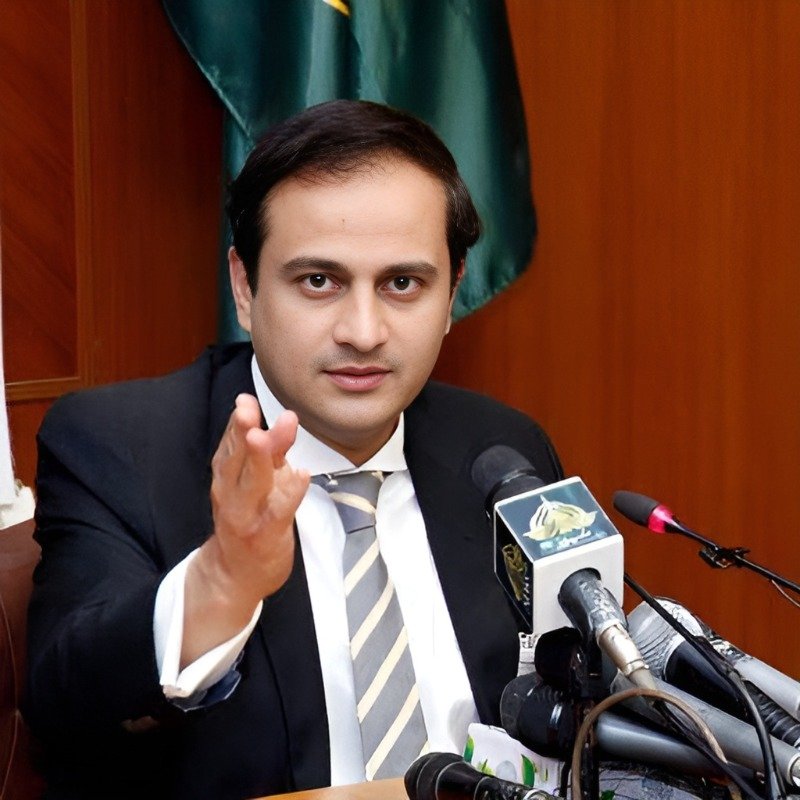
Karachi Mayor Barrister Murtaza Wahab has announced that development funds for industrial zones across the city are expected to increase in the next budget, as the Sindh government seeks to improve infrastructure and support industrial growth.
Addressing the inauguration ceremony of development projects in Sector 23 of the Korangi Industrial Area, Murtaza Wahab said better roads, drainage systems and modern infrastructure were essential for business activity, employment generation and economic stability.
The projects are being undertaken by the Korangi Industrial Trading Estate Development and Management Company (KITE-DMC). The ceremony was attended by Korangi Association of Trade and Industry (KATI) President Sheikh Umer Rehan, Deputy Patron-in-Chief Zubair Chhaya, KITE Chairman Zahid Saeed, Chief Executive Officer Saleem-uz-Zaman, industrialists, business leaders and other officials.
Sindh Government Increases Development Funding for Industrial Zones
Murtaza Wahab said the Sindh government had released development funds for industrial zones across Karachi, including Korangi, and increased allocations in recognition of the importance of industrial infrastructure.
He said the direct transfer of development funds to industrial stakeholders reflected confidence in the transparent execution of projects and the government’s commitment to a public-private partnership model.
The mayor urged industrialists to utilise the funds during the current fiscal year and assured them that allocations would be increased further in the next budget.
He added that the Karachi administration was undertaking the construction of 139 new roads at an estimated cost of Rs68 billion, with completion targeted within four months.
Jam Sadiq Bridge Rebuilt as M-9 Project Nears Completion
The mayor said the government had addressed several longstanding demands raised by KATI, including the reconstruction of Jam Sadiq Bridge.
According to Murtaza Wahab, the previous four-lane bridge had been demolished and replaced with a new eight-lane structure. He also said the M-9 project was in its final stages.
He assured KATI that he would visit the association to discuss notices issued by municipal authorities and develop a joint strategy with stakeholders for resolving industrialists’ concerns.
The administration would also explore converting residential plots into commercial plots in Mehran Town to promote small and medium-sized enterprises (SMEs) and support the area’s development as an industrial zone.
KATI Calls for End to Harassment Over NOCs
KATI President Sheikh Umer Rehan highlighted administrative and infrastructure challenges affecting businesses in the Korangi Industrial Area under the Karachi Metropolitan Corporation (KMC) and Korangi district administration.
He alleged that the Enforcement Department was harassing industrialists by issuing notices requiring no-objection certificates (NOCs) from 22 different departments, disrupting business activities. He called for a review of the process and improvements to the administrative framework governing the industrial area.
Sheikh Umer Rehan also expressed concern over delays in the construction of Road 6000. He said alternative routes had not been adequately arranged for the Bus Rapid Transit (BRT) project, creating the risk of further disruption to traffic and industrial transportation.
He urged the authorities to complete pending development works promptly and ensure suitable alternative routes for businesses and commuters.
During the ceremony, he also paid tribute to former KATI president Danish Khan for his services and announced that KATI Community Park would be renamed Danish Khan Community Park in recognition of his contributions.
Zubair Chhaya Seeks BRT Solutions and Model SME Zone
KATI Deputy Patron-in-Chief Zubair Chhaya said the Sindh chief minister had established the KATI Police Task Force in consultation with the association. He credited the task force’s performance with helping reduce crime in the industrial area.
Chhaya called for stricter law enforcement on Shahrah-e-Bhutto, citing risks from uncontrolled heavy traffic and reports of armed men blocking the road at night and robbing passing vehicles. He urged the Sindh government to address security concerns and ensure safer movement along the road.
He also raised industrialists’ reservations about the Yellow Line BRT project and called for their concerns to be addressed. Regarding Road 6000, he suggested that removing encroachments obstructing development work could accelerate completion.
Chhaya further criticised the issuance of red notices by municipal authorities, which he said were being used to harass industrialists. He called for greater coordination between the government and business community to resolve outstanding issues.
Mehran Town Proposed as a Dedicated SME Hub
KITE Chairman Zahid Saeed said Karachi’s geographical and industrial characteristics made its industrial zones distinct from those in other parts of the country.
He noted that the Korangi Industrial Area covered approximately 12,000 acres, highlighting its scale and importance to Pakistan’s industrial activity.
Saeed welcomed the inclusion of SITE and Port Qasim associations in the provincial development grant programme and said the Sindh chief minister had pledged to increase allocations further in the next budget.
He stressed that Mehran Town should be developed into a model SME zone, citing the sector’s contribution to the economy and the area’s growing role as a centre for cottage industries.
KITE Says Rs2 Billion Grant Is Not Enough to Meet Infrastructure Needs
KITE Chief Executive Officer Saleem-uz-Zaman said the Korangi Industrial Area had better infrastructure than several other industrial zones in Karachi, but substantial improvements were still required, particularly in sewerage and areas adjoining main roads.
He said KITE had previously received a grant of Rs1.05 billion, which was utilised for development work. Following that performance, the government approved a grant of Rs2 billion for the current year.
Saleem-uz-Zaman explained that KITE initially deferred the use of the grant received in May because of the monsoon season. Development work began after technical issues involving sewerage and infrastructure were addressed.
The first project, involving road construction in Sector 23, was inaugurated at the ceremony and is scheduled for completion by January.
He said the infrastructure requirements of the Korangi Industrial Area were extensive and the Rs2 billion allocation would not be sufficient to address all outstanding needs. He expressed hope that the Sindh government would increase the grant further to support uninterrupted development throughout the industrial zone.
Firefighting Equipment and Recruitment Measures Announced
Murtaza Wahab also announced that the ban on recruitment in the Fire Brigade had been lifted and that the Sindh government would begin recruitment to address staff shortages at fire stations.
He added that President Asif Ali Zardari had approved Rs7 billion for firefighting technology and modern equipment, enabling the purchase of 20 advanced fire tenders for Karachi.
KITE Project Director Masood Naqi and former KATI Chairman Senator Abdul Haseeb Khan also addressed the ceremony, welcoming the government’s development initiatives.
They highlighted public-private partnerships as a means of bringing government institutions and private businesses together to address infrastructure challenges and support economic progress.