
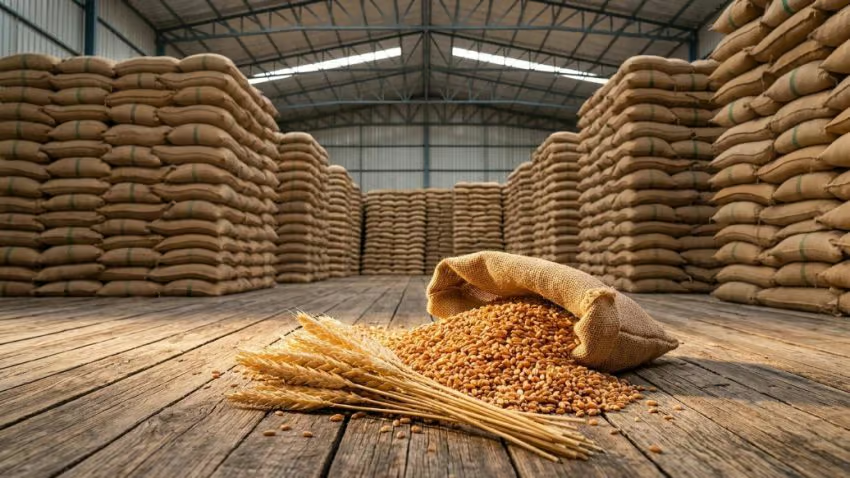
The Cereal Association of Pakistan (CAP) has urged the Government and the relevant Standing Committee to immediately allow private-sector wheat imports, warning that delays could lead to shortages and further increases in wheat prices across the country.
The association’s call comes as the Trading Corporation of Pakistan (TCP) moved to procure wheat internationally, but industry representatives say the government’s planned imports may not be enough to cover national requirements.
Government Wheat Import Tender Draws 9 International Companies
The TCP opened a tender for the import of 750,000 metric tons of wheat on September 16, 2026.
Nine international companies participated in the tender, submitting offers for a combined 656,000 metric tons. The quoted prices ranged from a minimum of $348.83 per metric ton to a maximum of $369.95 per metric ton.
CAP acknowledged the government’s efforts to arrange wheat imports through TCP but said the quantity being procured would cover only a portion of Pakistan’s overall requirement.
Pakistan Faces Potential Wheat Supply Gap
According to CAP, Pakistan’s annual wheat demand is estimated at approximately 4 million metric tons.
The association argues that additional supplies will therefore be required to bridge the expected demand-supply gap and maintain adequate stocks in the domestic market.
CAP has consequently called for private-sector participation alongside government procurement to ensure sufficient wheat supplies are arranged before shortages become more severe.
Private Imports Could Offer Lower-Cost Wheat
The association also pointed to relatively competitive prices in the international wheat market, saying wheat is currently available at approximately $320–325 per metric ton.
After accounting for freight, local charges and other import-related expenses, CAP estimates that private-sector imports could potentially make wheat available at around Rs100–101 per kilogram.
The association says this could provide an alternative source of supply at a time when domestic wheat prices have already risen considerably.
Domestic Wheat Prices Continue to Rise
Wheat prices in Pakistan’s domestic market have increased to approximately Rs125–130 per kilogram, according to CAP.
The situation is more pronounced in Khyber Pakhtunkhwa, where wheat prices have reached around Rs140 per kilogram.
The widening gap between international and domestic prices has strengthened the association’s argument for allowing private importers to bring additional supplies into the country.
CAP Questions Sufficiency of Provincial Quota System
CAP has also cautioned that the prevailing provincial quota system alone may not be sufficient to meet Pakistan’s wheat requirements.
The association believes allowing private-sector importers to bring wheat into the country and sell it in the open market in bulk quantities would increase overall supply and improve market availability.
According to CAP, greater availability could help ease price pressures and ultimately provide relief to consumers.
Delay in Imports Could Worsen Market Conditions
The association has warned that any delay in allowing private-sector wheat imports could result in a significant shortage and further deterioration in market conditions.
With the government’s current procurement covering only part of the country’s estimated annual requirement, CAP says additional private-sector supplies need to be arranged in time to maintain adequate stocks and uninterrupted market availability.