
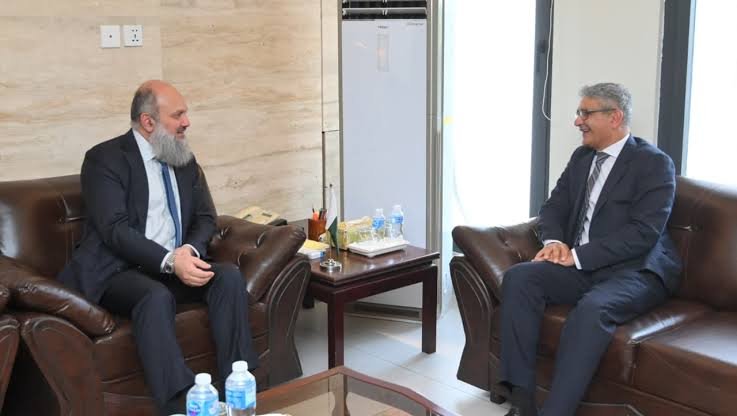
Islamabad, September 15, 2026: Pakistan and Canada have agreed to accelerate negotiations on the Foreign Investment Promotion and Protection Agreement (FIPA) while expanding bilateral cooperation across agriculture, mining, clean energy, aviation and value-added industries.
Federal Minister for Commerce Jam Kamal Khan and High Commissioner of Canada to Pakistan Tarik Ali Khan discussed the investment agreement and broader trade opportunities during a meeting at the Ministry of Commerce.
Secretary Commerce Jawad Paul and other senior ministry officials also attended the meeting.
Pakistan and Canada Push for Faster FIPA Progress
Both sides welcomed the growing momentum in Pakistan-Canada relations and expressed their resolve to translate political goodwill into stronger commercial and investment partnerships.
The next round of FIPA negotiations is expected to take place in the first week of October. Both sides agreed that the talks would provide an important opportunity to address outstanding issues and make substantive progress towards concluding the agreement.
The Canadian High Commissioner described FIPA as a foundational step towards increasing Canadian investment in Pakistan.
He said the agreement could give investors greater confidence through legal protections, arbitration and dispute-resolution mechanisms while creating space for more joint ventures and, eventually, broader trade arrangements.
Legal Protection Seen as Key to Investment
The Canadian side noted that companies increasingly recognise the scale and potential of Pakistan’s large consumer market.
However, a predictable and secure investment framework was described as essential for encouraging greater participation by Canadian businesses.
The High Commissioner also highlighted the potential role of more than 300,000 Canadians of Pakistani origin in strengthening investment and business linkages between the two countries.
Commerce Ministry Assures Investor Support
Jam Kamal Khan assured the High Commissioner of Pakistan’s full support for advancing the FIPA negotiations.
The Commerce Minister said the government was committed to addressing legitimate investor concerns and directed relevant officials to conduct preparatory consultations ahead of the next negotiating round.
The consultations are aimed at narrowing differences and identifying practical solutions before the October discussions.
“We are as ambitious as Canada in taking this process forward. Our objective is to resolve outstanding matters and establish a strong, mutually beneficial framework for long-term economic cooperation,” the Minister said.
Clean Energy Cooperation Expands
The meeting also reviewed opportunities in clean and renewable energy.
The Canadian side highlighted progress on a proposed hybrid renewable-energy project in Jhimpir and shared details of Canadian companies offering solar and green-energy solutions for Pakistani industries.
The discussions point towards potential cooperation in renewable energy investment, technology and industrial applications as both countries explore new areas of commercial engagement.
Canadian Mining Companies Eye Pakistan
Mining emerged as another key area of potential investment.
The Canadian High Commissioner said a strong delegation of Canadian companies involved in exploration, mining services, equipment and supply chains was expected to participate in an upcoming minerals investment forum in Pakistan.
Jam Kamal Khan welcomed the interest and identified mining as one of the government’s priority sectors.
Greater Canadian participation could potentially support investment, technology transfer and the development of local mining-related supply chains.
Agriculture and Food Processing Offer Opportunities
Agriculture and food security also featured prominently in the discussions.
Pakistan and Canada explored opportunities in dairy development, animal genetics, edible oils, fruit concentrates, food processing and value addition.
The Commerce Minister stressed the need to move beyond commodity trade by developing joint ventures capable of processing Pakistani agricultural products and exporting finished or value-added products to markets in the Middle East and other regions.
The Canadian side highlighted Pakistan’s growing imports of Canadian canola seed.
It noted that local crushing creates additional value for Pakistan through the production of edible oil and protein-rich animal feed.
Both sides agreed that further cooperation in canola processing, branding and export-oriented manufacturing could benefit farmers, industry and consumers.
Aviation and Aerospace Cooperation Discussed
Pakistan and Canada also reviewed opportunities in aviation and aerospace, including aircraft leasing, regional connectivity and cooperation with Canadian aviation companies.
The importance of PIA’s direct Toronto service was acknowledged as the only direct air connection between Pakistan and North America.
Both sides noted the significant commercial potential created by the large Pakistani diaspora in Canada and the role of stronger air connectivity in facilitating business, tourism and investment links.
Pakistan’s Strategic Location Attracts Interest
Jam Kamal Khan highlighted Pakistan’s strategic geographic position, expanding consumer market and connectivity with China, Central Asia and the Middle East as potential advantages for Canadian companies.
He emphasised the importance of matchmaking between Pakistani businesses, Canadian investors and buyers in third-country markets.
Such partnerships, he said, could help create commercially viable opportunities and expand Pakistan’s access to international markets.
Canada Seeks Greater Engagement With Asian Markets
The Canadian High Commissioner reaffirmed Canada’s interest in diversifying its international trade and strengthening engagement with Asian markets.
Both sides agreed to maintain close coordination, facilitate business delegations and work towards tangible outcomes from the forthcoming investment negotiations.
The planned October FIPA talks could therefore become an important milestone in efforts to strengthen Pakistan-Canada investment ties while opening new opportunities across minerals, agriculture, renewable energy, aviation and value-added manufacturing.