
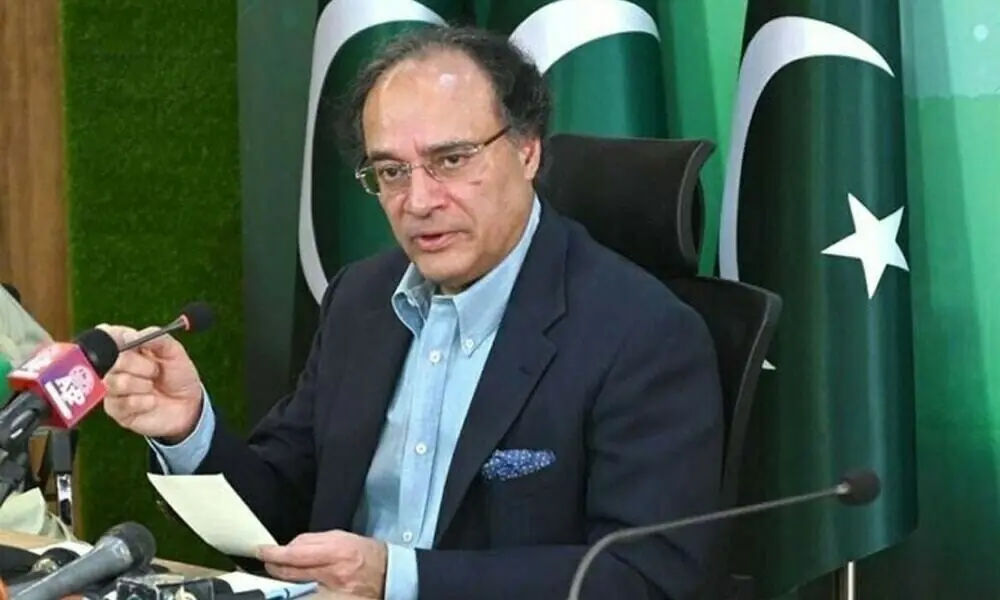
Pakistan’s Finance Minister Muhammad Aurangzeb has clarified that the proposed $10 billion facility from the United States is not a loan or conventional credit line.
According to the minister, the facility is being pursued primarily as a signal of currency and exchange-rate stability. Such a signal could help improve market confidence and enable Pakistan to raise longer-term financing from international capital markets on more favourable terms.
The proposed arrangement is being discussed with the US Treasury’s Exchange Stabilisation Fund, with Pakistan expecting a response by the end of September.
US Facility Aims to Strengthen Market Confidence
Aurangzeb said the proposed facility should not be viewed as additional borrowing for Pakistan.
Instead, its purpose is to provide a confidence signal that could support the rupee and foreign-exchange market while helping Pakistan regain stronger access to international debt markets.
The government hopes that greater confidence in Pakistan’s currency stability will allow the country to raise financing directly from global investors rather than relying heavily on short-term bilateral arrangements.
This would represent a shift in Pakistan’s external financing strategy.
Pakistan Seeks to Replace Short-Term Bilateral Loans
Pakistan currently has around $12.3 billion in short-term debt owed to Saudi Arabia, China and Kuwait.
These arrangements require regular rollovers, creating recurring refinancing pressure for the country.
Aurangzeb acknowledged the importance of bilateral partners that have supported Pakistan over the past decade but said the government does not want to continue increasing its dependence on short-term bilateral external debt.
Moving toward longer-maturity, market-based financing could give Pakistan greater flexibility in managing its external obligations.
It could also reduce the frequency with which the country needs to seek extensions or rollovers from bilateral lenders.
Talks Under Way With US Financial Institutions
Pakistan is also holding discussions with the US Export-Import Bank and the Development Finance Corporation.
These talks form part of a broader effort to strengthen Pakistan-US financial and economic cooperation.
The government appears to be pursuing several channels simultaneously rather than relying exclusively on the proposed Exchange Stabilisation Fund facility.
If successful, these arrangements could support investment and financing opportunities while strengthening confidence among international investors.
Pakistan Plans Eurobonds and Other Long-Term Debt
The government has already appointed three consortiums to work on potential international debt offerings, including Eurobonds, sukuk and dollar-settled rupee bonds.
Pakistan is considering bonds with maturities of five, seven and 10 years, depending on market conditions.
The strategy reflects the government’s intention to move toward longer-term market financing and away from repeated short-term borrowing.
However, Pakistan’s ability to raise funds at competitive rates will ultimately depend on investor confidence, global interest rates, domestic economic stability and the country’s creditworthiness.
Credit Rating Still Below Investment Grade
Pakistan recently received an upgrade to a B credit rating, but the country remains below investment-grade status.
This means international borrowing is likely to remain relatively expensive compared with financing available to higher-rated sovereign borrowers.
The government will therefore need to demonstrate sustained improvements in fiscal management, external balances, reserves and economic stability if it wants to secure cheaper long-term financing.
Pakistan also raised a $250 million Panda bond during the previous fiscal year with guarantees from the Asian Development Bank and Asian Infrastructure Investment Bank.
The transaction provided an example of how external guarantees can help Pakistan access international capital markets despite its below-investment-grade rating.
Why the US Facility Matters for Pakistan
Although the proposed $10 billion facility is not being described as a loan, its potential importance for Pakistan’s economy could still be substantial.
A credible stability signal from the United States could help improve investor confidence and support Pakistan’s efforts to return more consistently to international capital markets.
For a country facing recurring external financing requirements, access to longer-term market debt could reduce the pressure created by frequent short-term loan rollovers.
It could also provide the government with greater flexibility in managing its external liabilities.
However, the facility itself would not solve Pakistan’s underlying financing challenges.
Long-term improvement will still depend on stronger exports, sustainable foreign-exchange earnings, fiscal discipline and a reduction in the country’s recurring external financing needs.
Government Launches Simplified Tax Scheme for Small Traders
Aurangzeb made the remarks after launching a simplified tax scheme for small traders.
Under the new arrangement, eligible traders will pay 1% tax on annual sales or a minimum of Rs25,000, depending on the applicable calculation.
The scheme also provides exemptions from audits and from being classified as withholding agents.
The government is presenting the simplified framework as an effort to bring more small businesses into the formal tax system while reducing compliance burdens.
Pakistan’s Financing Strategy Is Changing
The proposed US facility is part of a broader shift in Pakistan’s approach to external financing.
Rather than continuously depending on short-term bilateral loans, the government wants to establish greater access to long-term market-based financing.
That transition could improve debt-management flexibility, but it also comes with greater exposure to international market conditions.
Investors will closely monitor whether Pakistan can maintain macroeconomic stability and improve its credit profile enough to borrow at sustainable rates.
The proposed US facility, therefore, should be viewed less as a direct injection of $10 billion and more as an attempt to create the conditions required for Pakistan to access significantly larger pools of international capital.
The Real Test Will Be Market Access
Finance Minister Aurangzeb’s clarification removes the impression that Pakistan is seeking another $10 billion conventional loan from Washington.
The government instead wants the proposed facility to signal currency and exchange-rate stability, strengthen investor confidence and help unlock longer-term borrowing from global markets.
The strategy could reduce Pakistan’s reliance on frequently rolled-over bilateral debt and provide a more sustainable financing structure.
But the success of the plan will ultimately depend on whether international investors believe Pakistan can maintain economic stability without repeatedly turning to emergency financing.
For Pakistan, the real objective is therefore not simply securing a US-backed stability signal. It is using that confidence to build lasting access to international capital markets on sustainable terms.