
Current Growth Rate Falls Short
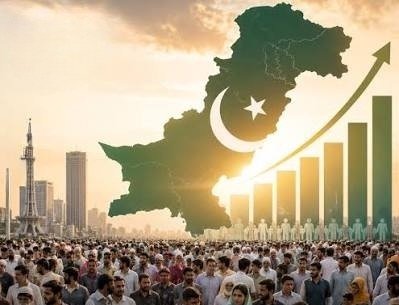
Pakistan requires sustained real economic growth of 6 to 7 per cent annually to manage its rapidly expanding population and generate adequate jobs, infrastructure and public services, business leaders said on Monday.
They cautioned that the existing growth trajectory remains inadequate for the country’s future needs. The population could approach 400 million by 2040. Without matching economic expansion, unemployment, poverty and pressure on education, healthcare and housing will intensify.
Pakistan Industrial and Traders Associations Front founder Mian Shafqat Ali said the country must move from short-term economic management to a long-term growth strategy. This strategy should create productive employment for millions of young people entering the workforce.
Pakistan cannot continue with low growth while its population keeps rising, he added. The economy must expand by at least 6 to 7 per cent in real terms each year to deliver jobs, education, healthcare, housing and other basic facilities.
A growth rate of around 3 to 4 per cent may offer temporary stability. However, it is not enough to raise living standards substantially or generate sufficient employment.
Demographic Challenge Demands Economic Roadmap
According to World Bank data, Pakistan’s GDP stood at about $407.3 billion in 2025. Per capita income was approximately $1,596, while economic growth measured 3.7 per cent.
Business leaders calculated that an economy of roughly $640 billion would be needed merely to maintain the current per capita income level if the population reaches 400 million by 2040.
Significantly higher output would be required to improve living standards. An economy of around $2 trillion would be necessary to achieve a per capita income of $5,000. Reaching $6,000 per capita would demand an economy of approximately $2.4 trillion.
Syed Mahmood Ghaznavi, another office-bearer, said the demographic challenge should be treated as an economic planning issue rather than solely a population-control matter. A large young population can become a major source of growth if the right conditions for investment, industrialisation and employment are created.
“We have to turn our young population into an economic asset by investing in skills, education and productive sectors,” he said.
This requires a clear 2040 economic roadmap with targets for exports, industrial production, investment, tax collection and productivity. Failure to create opportunities for young people could turn the demographic dividend into a serious economic burden.
The business community called for a major expansion in export-oriented industries. Higher foreign exchange earnings will be essential to support a larger economy without repeated external financing pressures.
They also stressed the need to attract private investment by reducing the cost of doing business, improving energy supply, simplifying regulations and ensuring policy consistency. Higher productivity is equally critical, as simply expanding the workforce will not deliver sustainable income gains.
Leaders emphasised that sustained high growth, combined with structural reforms and targeted investment in human capital, remains the only viable path to prevent mounting social and economic pressures in the decades ahead.