
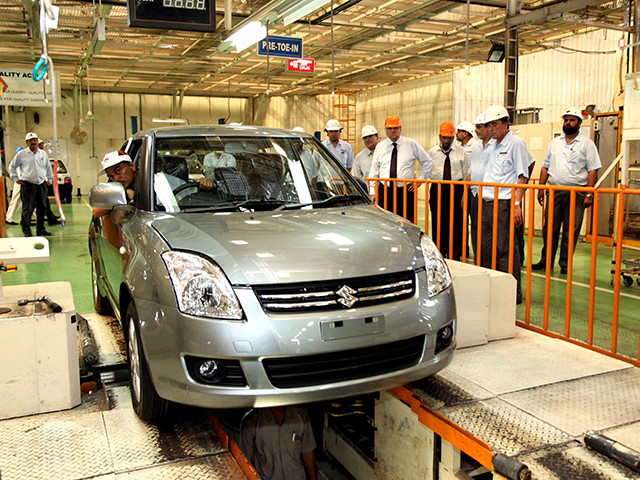
Pakistan’s proposed Auto Policy 2026-31 has been sent back to the drawing board after local automobile manufacturers raised strong objections to its heavy emphasis on electric vehicles (EVs). The government has restarted the policy drafting process following industry concerns that the original proposal placed conventional automakers and parts manufacturers at a competitive disadvantage.
The policy reversal comes at a critical time for Pakistan’s automotive sector, as the previous Auto Industry Development and Export Policy 2021-26 expired on June 30, 2026. The absence of a replacement policy has already led to higher taxes on hybrid vehicles, price increases, and uncertainty across the industry.
Government Reviews EV-Focused Auto Policy After Industry Objections
The Ministry of Industries and Production had prepared the draft Auto Policy 2026-31 after consultations with various stakeholders, with a strong focus on accelerating the adoption of electric vehicles.
Officials viewed the transition to EVs as a strategic response to Pakistan’s growing fuel import bill, particularly after renewed geopolitical tensions highlighted the country’s dependence on imported petroleum products. Pakistan currently imports around 80 percent of its petroleum requirements, making fuel security a major economic concern.
However, local automobile manufacturers approached Prime Minister Shehbaz Sharif, arguing that the proposed policy disproportionately favoured electric vehicles while creating challenges for existing manufacturers of conventional and hybrid vehicles.
According to sources, the prime minister directed that the draft be withdrawn and ordered the formation of a new committee to prepare a revised policy that addresses industry concerns.
Policy Delay Triggers Higher Taxes and Vehicle Prices
The delay in finalising the new policy has had immediate consequences for both manufacturers and consumers.
With the expiry of the Auto Industry Development and Export Policy 2021-26 on June 30, the Federal Board of Revenue automatically restored the general sales tax on vehicles to 25 percent.
Hybrid electric vehicles and plug-in hybrid electric vehicles, which previously benefited from a reduced GST rate of 8.5 percent, lost that concession from July 1.
As a result, several automakers, including Toyota and Honda, increased the prices of hybrid models by more than Rs1.3 million in certain cases. Some manufacturers also temporarily suspended vehicle invoicing and deliveries while awaiting policy clarity.
Auto Parts Industry Calls for Gradual EV Transition
The Pakistan Association of Automotive Parts & Accessories Manufacturers (PAAPAM) and other industry stakeholders have expressed disappointment over the uncertainty surrounding the new policy.
Rather than opposing electric vehicles, industry representatives have called for a gradual transition that balances environmental objectives with the protection of local manufacturing.
PAAPAM has proposed maintaining an 18 percent GST on hybrid vehicles until Pakistan develops sufficient EV charging infrastructure and a domestic supply chain for electric vehicle components.
The association also wants government incentives to be linked to progressively higher localisation targets, encouraging manufacturers to produce batteries, electric motors and electronic components within Pakistan instead of relying on imports.
Industry representatives argue that existing auto parts manufacturers should receive financial and technical support to upgrade their facilities and transition toward EV production.
Concerns Over Local Manufacturing and Employment
One of the industry’s biggest concerns is that excessive incentives for imported EV kits could weaken Pakistan’s domestic manufacturing base.
PAAPAM warned that without a well-planned transition strategy, generous concessions for imported electric vehicle components could undermine local investment, reduce value addition and threaten thousands of jobs in the automotive supply chain.
The association stressed that all existing manufacturers should be given equal opportunities to introduce electric and hybrid vehicles while continuing to expand local production capabilities.
Industry leaders believe that technology transfer and localisation should remain central objectives of any future automotive policy to strengthen Pakistan’s long-term industrial competitiveness.
Future Auto Policy Must Balance Innovation and Industry Growth
The government’s decision to redraft the Auto Policy 2026-31 highlights the challenge of balancing Pakistan’s transition toward cleaner transportation with the need to protect domestic manufacturing and employment.
While expanding electric mobility remains an important objective for reducing fuel imports and lowering emissions, industry stakeholders argue that the shift must be supported by local production, infrastructure development and a realistic transition roadmap.
The revised policy will be closely watched by manufacturers, investors and consumers alike, as it will shape the future direction of Pakistan’s automotive industry for the next five years.
Future Success Depends on Balanced Policy Implementation
Pakistan’s next auto policy will need to strike a careful balance between promoting electric vehicles and safeguarding the country’s existing automotive ecosystem. Encouraging localisation, supporting technology transfer and providing a gradual transition framework could help ensure that the industry remains competitive while advancing toward cleaner and more sustainable transportation.