
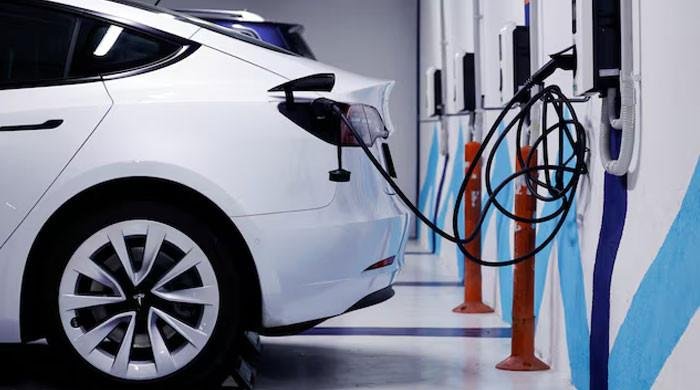
Pakistan and China have signed a new agreement aimed at accelerating the country’s electric vehicle (EV) industry by promoting local manufacturing, technology transfer, and the expansion of EV charging infrastructure. The initiative is expected to strengthen Pakistan’s transition toward clean transportation while supporting industrial growth and reducing reliance on imported fossil fuels.
The Memorandum of Understanding (MoU) was signed between StarCharge, StarCharge Energy Pakistan, and Bahum Global Ltd. in the presence of Special Assistant to the Prime Minister (SAPM) on Industries and Production Haroon Akhtar Khan.
Pakistan China MoU Supports EV Ecosystem
The newly signed Pakistan China MoU is designed to promote collaboration in electric vehicle technologies, with a particular focus on developing local manufacturing capabilities and expanding charging infrastructure across Pakistan.
The agreement complements the government’s upcoming Battery Energy Storage System (BESS) Policy, which aims to encourage investment in battery storage technologies, EV production, and related industries.
Officials believe the policy will help attract foreign investment while supporting the growth of Pakistan’s clean energy and electric mobility sectors.
EV Charging Infrastructure Expansion Planned
A key objective of the agreement is the nationwide expansion of EV charging infrastructure, making electric vehicles more practical and accessible for consumers.
The government has been working to facilitate the installation of charging stations across major cities and highways to support the expected increase in EV adoption.
Improved charging facilities are expected to boost consumer confidence and accelerate the transition toward electric mobility in Pakistan.
Local Manufacturing and Technology Transfer
Speaking at the signing ceremony, Haroon Akhtar Khan said the partnership reflects the government’s commitment to developing Pakistan’s domestic EV industry.
He noted that cooperation with Chinese companies would help promote local battery manufacturing, facilitate technology transfer, and strengthen Pakistan’s industrial capabilities in emerging green technologies.
The collaboration is also expected to create employment opportunities for skilled workers and young professionals while encouraging innovation in the automotive sector.
Reducing Dependence on Imported Fuel
The government believes wider adoption of electric vehicles will significantly reduce Pakistan’s dependence on imported petroleum products.
Lower fuel imports could help reduce the country’s import bill, strengthen energy security, and contribute to environmental sustainability by lowering carbon emissions.
Officials view electric mobility as an important component of Pakistan’s long-term strategy for achieving cleaner transportation and sustainable economic growth.
Pakistan-China Green Technology Cooperation Expands
The latest agreement represents another milestone in growing Pakistan-China cooperation beyond traditional infrastructure projects.
Both countries are increasingly focusing on green technologies, advanced manufacturing, renewable energy, and industrial localisation under their broader economic partnership.
The MoU is expected to support Pakistan’s efforts to build a competitive EV ecosystem while encouraging investment, innovation, and sustainable industrial development.