
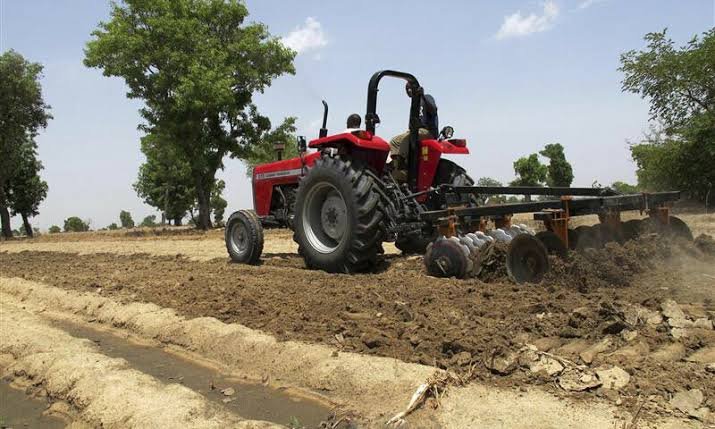
Pakistan’s agricultural landscape is undergoing one of its biggest transformations in decades. The latest figures from the Pakistan Bureau of Statistics (PBS) reveal that the Pakistan Tractor Population has reached an unprecedented 986,998 units under the 7th Agricultural Census 2024, highlighting the country’s accelerating shift toward mechanised farming.
The milestone reflects far more than an increase in machinery. It signals changing farming practices, stronger investment in agricultural technology, rising demand for modern equipment, and new business opportunities across the rural economy. At a time when food security, climate resilience, and agricultural productivity have become national priorities, the rapid expansion of Pakistan’s tractor fleet is emerging as one of the strongest indicators of structural change in the country’s farming sector.
Pakistan Tractor Population Records Historic Growth
The latest census data shows that Pakistan’s tractor fleet has expanded dramatically over the past three decades. The country had only 252,861 tractors in 1994, which increased to 401,663 in 2004 before almost reaching the one-million mark in 2024.
More importantly, the pace of growth has accelerated significantly. Between 1994 and 2004, tractor numbers increased by around 59 percent. However, during the following two decades, growth surged by approximately 146 percent, demonstrating that farm mechanisation has become a central feature of Pakistan’s agricultural development.
The figures indicate that farmers are increasingly investing in machinery to improve productivity, reduce dependence on manual labour, and manage larger cultivated areas more efficiently.
Punjab Continues to Dominate Pakistan Tractor Population
Punjab remains the backbone of Pakistan’s agricultural machinery market. The province accounts for 777,404 tractors, representing nearly 79 percent of the national tractor population.
Sindh follows with 85,895 tractors, while Khyber Pakhtunkhwa and Balochistan each account for just over 61,000 units.
Within Punjab, the Faisalabad Division holds the largest share of tractors, reflecting its position as one of Pakistan’s most productive agricultural regions. Meanwhile, Dera Ghazi Khan Division contributes a comparatively smaller portion of the provincial fleet.
In Sindh, Hyderabad Division leads tractor ownership, whereas Karachi records the smallest share because of its predominantly urban economy.
Balochistan Emerges as the Fastest Growing Market
Although Punjab remains the largest market, the biggest surprise in the census comes from Balochistan.
The province recorded an extraordinary 564 percent increase in tractor numbers between 2004 and 2024. While this expansion started from a relatively small base, it highlights growing investment in agriculture and improving access to mechanised farming across previously underdeveloped farming regions.
For tractor manufacturers, financial institutions, and agricultural equipment suppliers, Balochistan is rapidly becoming one of Pakistan’s most promising emerging markets.
Individual Farmers Continue to Drive Machinery Investment
The census shows that Pakistan’s agricultural machinery market remains overwhelmingly dominated by private ownership.
Out of the country’s total tractor fleet, more than 778,000 tractors are individually owned, while around 207,000 are jointly owned. Cooperative societies own only a very small fraction of the total fleet.
This ownership pattern suggests that individual farmers continue to make independent investment decisions, creating sustained demand for agricultural financing, tractor leasing, and rural credit programs.
Solar Irrigation Creates New Business Opportunities
The census also highlights another major transformation taking place alongside the growth of the Pakistan Tractor Population.
The number of tubewells and lift pumps has climbed to 1.83 million, representing a 97 percent increase since 2004.
More significantly, solar energy has become the leading power source for tubewells, with more than 912,000 solar-powered units now operating nationwide. This exceeds both diesel-powered and electric-powered systems.
The growing adoption of solar irrigation reflects rising fuel costs, increasing energy shortages, and government efforts to encourage renewable energy solutions in agriculture. It also opens significant opportunities for banks, solar companies, equipment manufacturers, and agricultural technology providers looking to expand into Pakistan’s rural economy.
Digital Agricultural Census Signals Smarter Policy Planning
The 7th Agricultural Census marks another milestone as Pakistan’s first fully digital agricultural census.
According to the Pakistan Bureau of Statistics, the newly collected mechanisation data will support future policymaking for agricultural machinery manufacturing, import substitution, rural financing, and farm productivity initiatives.
Reliable digital data is expected to help both policymakers and private investors make better-informed decisions regarding agricultural development, manufacturing capacity, and technology adoption.
Why Pakistan Tractor Population Matters for the Economy
The rapid expansion of the Pakistan Tractor Population is more than a statistical achievement. It reflects increasing confidence in mechanised agriculture and signals long-term growth opportunities for tractor manufacturers, auto assemblers, agricultural equipment suppliers, renewable energy companies, banks, and rural financing institutions.
As Pakistan moves toward modern farming practices, mechanisation and clean energy adoption are likely to remain central drivers of agricultural productivity, investment, and economic growth. If this momentum continues, the country’s agriculture sector could become significantly more competitive while strengthening food security and creating new opportunities across the rural economy.