
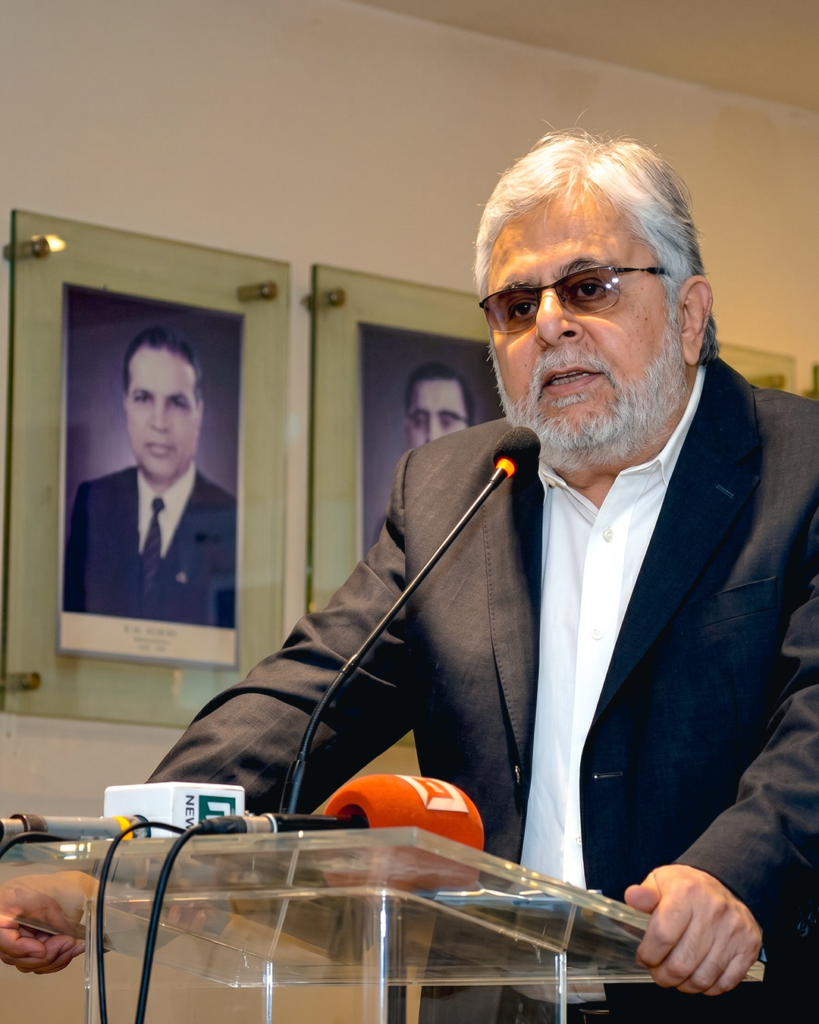
Budget 2026 Reaction from Pakistan’s business community has exposed a widening gap between government promises and industry expectations. Businessmen Group Chairman and former Chief Executive of the Trade Development Authority of Pakistan, Zubair Motiwala, delivered a blunt assessment of the federal budget, arguing that while a few measures deserve appreciation, the overall document fails to provide a convincing roadmap for economic revival.
Addressing a press conference, Motiwala questioned whether the budget truly addresses the challenges faced by exporters, industrialists, and ordinary citizens.
Budget 2026 Reaction Highlights Lack of Export Incentives
Motiwala acknowledged that the Economic Survey indicated improved fiscal space and praised the country’s remittance performance, predicting that overseas Pakistanis could push annual remittances beyond 40 billion dollars.
However, he expressed disappointment over the government’s failure to announce meaningful incentives for exports.
According to him, the budget does not contain any clear strategy capable of substantially increasing exports, despite repeated official claims that export-led growth remains a national priority.
He argued that exporters have once again been left searching for practical support measures.
Fixed Tax Regime Still a Major Concern
One of the strongest points raised during the Budget 2026 Reaction was the demand for a predictable fixed tax regime.
Motiwala reiterated that businesses have consistently sought certainty in taxation. He maintained that authorities should collect taxes under a fixed framework rather than continuously changing policies that create uncertainty and discourage investment.
He also criticized the government’s approach of placing additional burdens on existing taxpayers instead of expanding the tax base.
According to him, Pakistan’s long-standing problem is not the absence of taxpayers but the failure to bring untaxed sectors into the formal economy.
Energy Costs Remain the Elephant in the Room
Energy prices emerged as another major concern.
Although the government referred to energy-related initiatives, Motiwala argued that no practical details were shared.
He questioned how the authorities intend to reduce costs associated with LNG and gas supplies. He also noted the complete absence of any significant discussion regarding electricity prices.
For manufacturers already struggling with rising operational expenses, these unanswered questions could determine whether businesses survive or shut down.
He warned that industries across the country are operating below capacity, reducing productivity and limiting employment opportunities.
Refund Delays Continue to Hurt Industry
The BMG chairman urged the government to immediately release pending refunds owed to exporters and businesses.
He stated that billions of rupees remain tied up in delayed payments, depriving industries of working capital needed to maintain operations and pursue expansion.
At a time when businesses are facing liquidity constraints, refund delays continue to undermine confidence in the economic system.
Tax Relief Measures Win Limited Praise
Despite his criticism, Motiwala acknowledged several positive decisions.
He welcomed the elimination of tax on super tax collections, calling it a sensible move.
He also appreciated the reduction in taxes imposed on salaried individuals and described lower taxes for the construction sector as encouraging developments that could stimulate economic activity.
Construction, he argued, supports numerous allied industries and generates employment across various skill levels.
Can the Government Achieve Its Ambitious Tax Target?
Perhaps the most alarming question raised during the Budget 2026 Reaction concerned the government’s revenue ambitions.
The federal government has set a tax collection target of 15 trillion rupees.
Motiwala openly questioned how authorities plan to generate an additional 1.5 trillion rupees required to meet this objective.
Without expanding the tax net and improving compliance mechanisms, he suggested that achieving such targets may prove difficult.
The fear within the business community is that shortfalls could ultimately result in heavier taxation on already compliant sectors.
Budget 2026 Reaction: Neither Good Nor Bad
Summing up his assessment, Motiwala described the budget as neither entirely good nor entirely bad.
He acknowledged selected relief measures but stressed that the absence of a comprehensive strategy for exports, energy affordability, industrial competitiveness, and tax expansion leaves many critical questions unanswered.
His final message carried a warning policymakers may find difficult to ignore.
If industries operate efficiently, people find jobs. When factories slow down, economic hardship spreads beyond boardrooms and factory floors to ordinary households.
For Pakistan’s business community, the real test of this budget will not be in the announcements made today but in the results delivered over the coming months.