
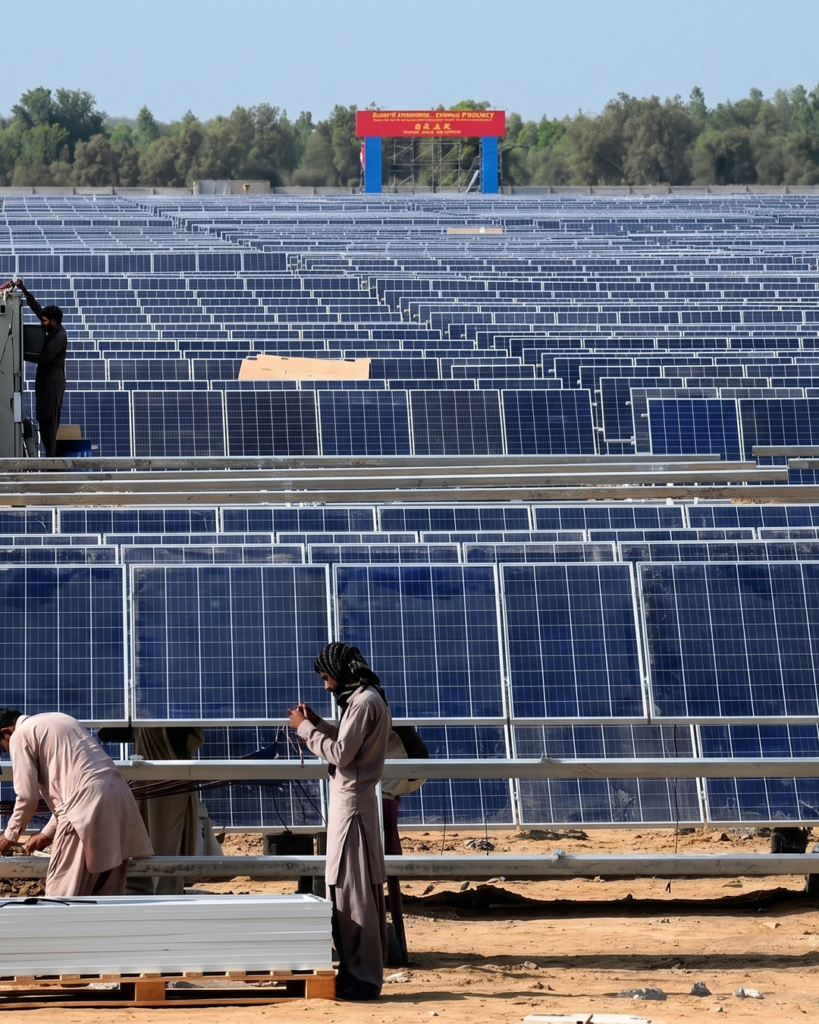
Pakistan Energy Transition has reached a defining moment. For decades, the country’s electricity system depended heavily on imported fuels and costly thermal generation. Today, the balance of power is changing dramatically.
According to the Pakistan Economic Survey FY26, the country has entered a new era in which clean and indigenous energy sources now dominate the national electricity mix. The shift is not merely statistical. It represents a strategic economic transformation capable of shielding Pakistan from global oil shocks while building long-term energy security.
Pakistan Energy Transition Ends Thermal Power’s Reign
Pakistan’s total installed electricity generation capacity expanded by 8.5 percent to 49,651 MW by March 2026. What makes this milestone extraordinary is where the growth came from.
For the first time in Pakistan’s history, hydropower, nuclear energy, renewable sources, and solar net-metering collectively account for 53.1 percent of electricity generation capacity. Thermal power, once the undisputed backbone of the system, has fallen below the halfway mark.
Thermal generation capacity now represents 49.2 percent of installed capacity compared with 56.7 percent previously. The decline signals a decisive move away from imported fossil fuels that have long burdened Pakistan’s foreign exchange reserves.
The real game changer has been rooftop solar.
Consumer-driven solar net-metering contributed an astonishing 7,319 MW to the national grid. Households and businesses are no longer passive consumers. They are becoming electricity producers, fundamentally changing the country’s energy landscape.
Solar Revolution Gives Consumers New Power
The explosive growth of solar adoption reflects both necessity and opportunity.
Faced with rising electricity tariffs, consumers increasingly turned toward solar systems to control costs and reduce dependence on conventional supply. The result is one of the fastest grassroots energy transitions in the region.
During the first nine months of FY26, Pakistan generated 92,835 GWh of electricity. Sustainable energy sources played a leading role in meeting this demand.
Thermal sources generated 43,581 GWh, maintaining the largest single contribution. Hydropower followed strongly with 27,961 GWh, highlighting the importance of indigenous water resources. Nuclear facilities produced 17,133 GWh, while renewable sources, including net-metered solar systems, contributed 4,160 GWh.
The numbers tell a compelling story. Pakistan’s future energy growth is increasingly being driven by cleaner and domestically available resources.
Pakistan Energy Transition Changes Consumption Patterns
Electricity consumption rose by 3.8 percent to 83,143 GWh during the reviewed period.
Households remained the largest electricity users, accounting for nearly 48 percent of national consumption. However, this share declined slightly as consumers responded to higher tariffs through conservation measures and solar installations.
Industrial activity showed renewed momentum, absorbing 32 percent of electricity consumption as manufacturing demand recovered.
Commercial users represented 8 percent of usage. Agricultural consumption declined sharply to 3 percent as farmers increasingly adopted solar-powered tube wells. Government and public sector categories accounted for the remaining 9 percent.
These changing patterns indicate that efficiency and self-generation are beginning to reshape demand across sectors.
Future IPPs Signal a Cleaner Energy Future
Pakistan’s investment pipeline suggests the green transition is far from over.
The Private Power and Infrastructure Board currently oversees 90 operational Independent Power Producers with a combined capacity of 20,769 MW.
Even more revealing is the composition of the upcoming 6,536 MW project pipeline.
Hydropower dominates future investments with 4,564 MW, representing 70 percent of planned capacity additions. Thar coal projects account for 1,320 MW to support grid stability using indigenous resources.
The remainder includes 300 MW from imported coal and another 300 MW from solar and wind projects.
The message is unmistakable. Future investments increasingly favour domestic and lower-cost energy sources.
Transport Fuels Still Drive Petroleum Demand
Despite progress in electricity generation, Pakistan’s petroleum sector remains heavily influenced by transportation needs.
Petroleum consumption reached 13.64 million metric tonnes during July-March FY26, increasing by 3.5 percent year-on-year.
The transport sector absorbed 82.5 percent of total petroleum demand.
Motor Spirit consumption stood at 5.78 million tonnes, closely followed by High-Speed Diesel at 5.36 million tonnes. Furnace Oil usage continued its gradual decline as power producers shifted toward coal, hydropower, and alternative sources.
The trend suggests that while electricity generation is becoming greener, transportation remains a major challenge in the country’s energy transition journey.
Gas and Coal Continue Supporting Energy Security
Natural gas continues to play a vital role, accounting for approximately 29.3 percent of Pakistan’s primary energy supply.
Average gas consumption reached 2,929 MMCFD, including 613 MMCFD of imported RLNG to address domestic supply gaps.
Meanwhile, indigenous coal usage expanded significantly. The power sector consumed 12,758.3 thousand metric tonnes of coal, representing nearly 60 percent of total national coal demand.
Although coal remains controversial from an environmental perspective, the use of local resources reflects Pakistan’s broader objective of reducing dependence on expensive imports.
A Turning Point for Pakistan’s Economy
Pakistan Energy Transition is no longer a distant policy ambition. It is unfolding in real time.
The rapid rise of solar energy, expanding hydropower investments, growing nuclear generation, and the strategic use of indigenous resources are collectively rewriting the country’s economic future.
Challenges remain. Grid modernization, storage solutions, and transport sector reforms will determine how successful this transition becomes.
Yet one reality is clear.
Pakistan is moving from an era defined by imported fuel dependence toward a future powered increasingly by its own resources. If managed wisely, this transformation could strengthen energy security, improve economic resilience, and redefine the nation’s development trajectory for decades to come.