
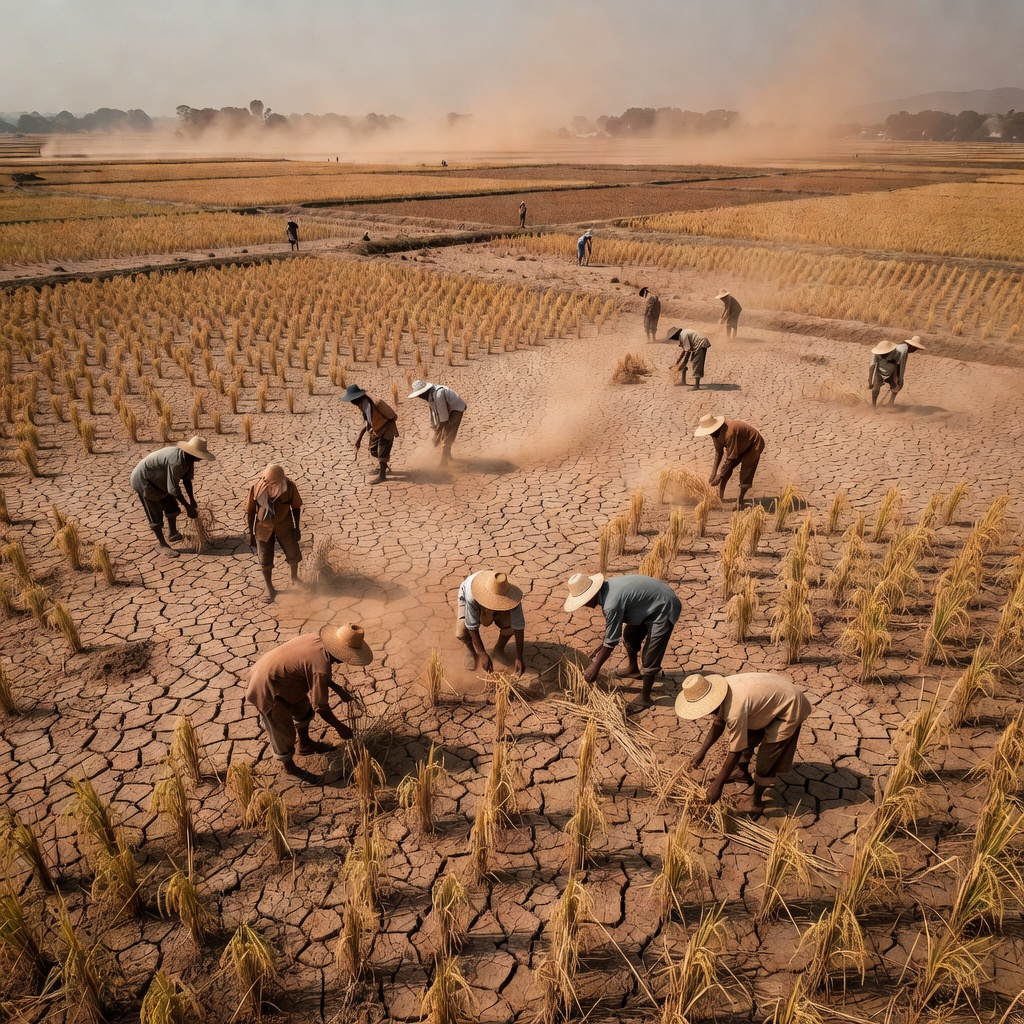
Dry weather is disrupting crop planting across Asia and raising serious concerns about regional food supplies. Farmers from India to Indonesia are reducing planting as hot temperatures and below-normal rainfall damage crops. Analysts and traders warn the situation could worsen significantly in the months ahead.
El Nino Set to Deliver a Second Blow
One of the strongest El Niño patterns on record is expected to develop in the second half of 2026. The weather phenomenon brings hot and dry conditions to Asia while triggering excessive rainfall in the Americas.
Climate change is making the impact of El Nino even more severe. Farmers are already struggling with fertiliser and diesel shortages caused by the Iran war, and El Nino-driven dryness adds another layer of pressure.
Expert Warns Early Signs Are Already Visible
US-based meteorologist Chris Hyde of satellite firm SkyFi said El Nino’s global impact begins in Southeast Asia, India, and Australia before spreading to the Americas. Hyde confirmed that high-resolution satellite imagery already shows early signs of drought across parts of Asia. He warned of wider downstream consequences for North and South America as conditions develop.
India’s Monsoon Forecast Cut Again
India’s meteorological department recently reduced its forecast for the four-month monsoon season. The monsoon delivers around 70% of India’s annual rainfall. A New Delhi-based dealer at a global trade house said temperatures are well above normal and conditions are unfavourable for timely sowing of summer crops.
He warned of possible below-normal rainfall and prolonged dry spells even after the monsoon arrives. India grows rice, soybeans, pulses, sugarcane, and corn during the summer season.
Southeast Asia Farmers Fear Crop Losses
Dryness is reducing rice and palm oil yields across Southeast Asia. Nerawat Oramah, a 47-year-old farmer in Thailand’s Chainat province, said everyone is worried about drought. He said he may only get one harvest instead of two this season. Thailand and the Philippines plant their main rice crops in June and July.
Vietnam and Indonesia are currently sowing their second-season crops. Indonesia’s Java island and parts of northern Sumatra, south Kalimantan, and Sulawesi have seen no rain for more than 10 days.
Food Prices Rise Sharply
Wheat prices have risen around 20% since the start of 2026, driven largely by drought concerns in key US growing regions. Rice prices at major Southeast Asian export hubs have climbed around 15% over the past month. A Singapore-based trader said rice prices are rising sharply despite no major shortage yet.
He warned that India, which controls 40% of global rice exports, may introduce export restrictions if early monsoon conditions disappoint. India currently holds stockpiles several times larger than its domestic needs.
Fertiliser Shortage Could Cut Rice Output by 20%
KKP Research, a unit of Thailand’s Kiatnakin Phatra Bank, said strong reservoir levels could cushion some of the drought’s impact. However, the bank expressed greater concern about fertiliser supply. It estimated that a fertiliser shortage could reduce rice production by up to 15 to 20% in the worst case.
Australia Faces El Nino Risk After Late Sowing
Recent rains over dry Australian farmland triggered late wheat sowing, but growers remain cautious about El Nino. Australia’s Bureau of Meteorology predicts cropping areas in New South Wales and Queensland will receive 20 to 40 millimetres less rain than usual over the next three months.
Farmer John Lowe near Burcher in central New South Wales said his total cropping area remains around 30% smaller than it could have been.
Americas and China Face Different Outlook
El Nino is expected to bring more rainfall to the Americas and remain largely neutral for China and the Black Sea region. Agricultural meteorologist Drew Lerner of World Weather Inc said there is little statistical correlation between El Nino and US summer weather. He noted that some El Nino years bring slightly more moisture to the US but not necessarily above-normal rainfall.