
High Taxes Suppress Mobile Adoption
Pakistan Lags Regional Peers
A new report commissioned by telecom group VEON and prepared by Frontier Economics has highlighted how excessive taxes are raising costs and slowing down the country’s digital transformation.
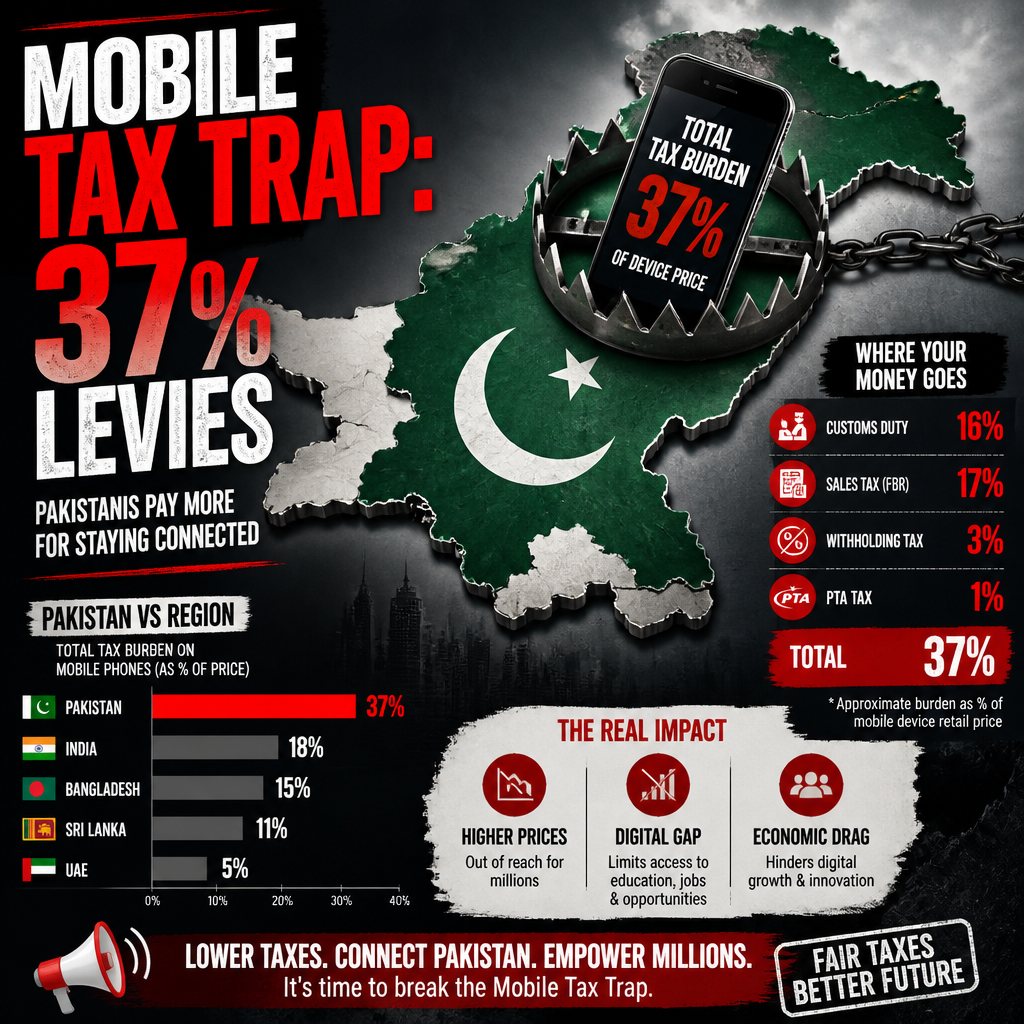
The study reveals that mobile services in Pakistan face a combined sales and turnover tax burden of 37%.This includes 19.5% sales tax, 15% advance income tax, and 2.5% regulatory duty. On top of this, operators pay 29% corporate income tax and 10% super tax on profits.
These levies ultimately result in higher prices for consumers, discouraging smartphone ownership and data usage. Currently, 68% of individuals aged 15 and above do not own a smartphone. Pakistan ranks 101st out of 105 countries in average internet speeds, with average revenue per user (ARPU) at just $1 per month.
The report notes that Pakistan has one of the highest combined sales tax rates on mobile internet in the region at 35%, second only to Bangladesh at 39%.
Economic Impact and Long-term Risks
Call for Tax Reforms
High taxes reduce mobile penetration and usage, which in turn slows digitalisation and keeps the tax base narrow, creating a self-reinforcing trap. The study estimates that a 1% increase in mobile penetration could boost GDP per capita growth by 0.115 percentage points.
Mobile connectivity brings positive spillovers across education, healthcare, financial services, and e-commerce. Pakistan is already lagging behind in 5G readiness and has nearly one-third of its population outside 4G coverage.
Fixed broadband penetration remains among the lowest in the region.
The report suggests reducing the combined tax burden from 37% to 17% through cuts in customer taxes and regulatory charges. Such reforms may initially reduce direct revenue but could become revenue-positive by 2031 through expanded economic activity and a broader tax base.
Telecom operators are urging the government to reduce the 15% advance income tax, abolish duties on equipment, and rationalise sector-specific levies ahead of the federal budget. Lower taxes would improve affordability and accelerate broadband expansion in underserved areas.