
Market Under Pressure as KSE-100 Index Decline Accelerates
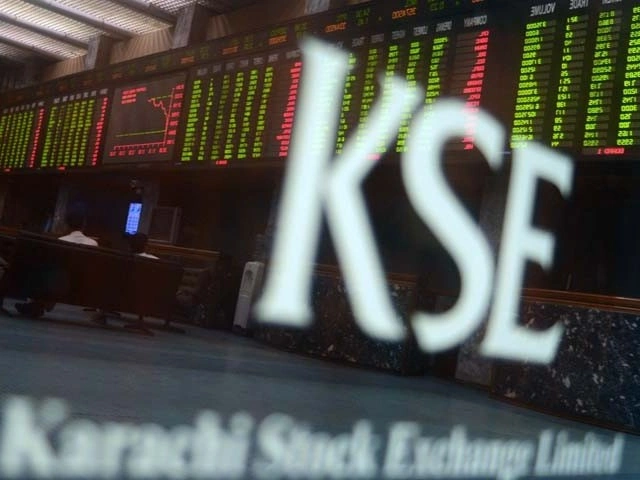
The KSE-100 Index Decline intensified sharply on Monday as Pakistan’s benchmark stock index fell under heavy selling pressure, closing at 170,600.20 after losing 3,362.61 points, or 1.93 percent. The session reflected a decisive shift in sentiment as investors rushed to reduce exposure across key sectors amid worsening macroeconomic and geopolitical conditions.
Market activity showed extreme volatility, with the index swinging nearly 3,775 points during the day. It touched an intraday high of 174,171.64 before plunging to 170,396.85, signaling aggressive profit-taking and panic-driven exits in later trading hours.
Total traded volume in the benchmark index reached 246.94 million shares, yet the breadth of the market painted a deeply negative picture, with 85 of the 100 index companies closing in the red.
Inflation Surge Amplifies KSE-100 Index Decline Pressure
A major catalyst behind the KSE-100 Index Decline was the latest inflation data, which showed Pakistan’s Consumer Price Index rising to 11.7 percent year-on-year in May 2026. This marked a sharp increase from 10.9 percent in April and a dramatic jump from 3.5 percent in the same month last year.
The inflation surprise has unsettled investors, who now fear that monetary easing may be delayed further. Higher inflation typically reduces expectations of interest rate cuts, increasing borrowing costs for businesses and pressuring corporate earnings. This shift in outlook triggered broad-based selling, particularly in rate-sensitive sectors.
Sector-Wise Breakdown Highlights Widespread Weakness
The KSE-100 Index Decline was driven primarily by heavy losses in key sectors:
The commercial banks sector led the downside, dragging the index by more than 680 points as concerns over margins and interest rate uncertainty weighed heavily. Cement stocks followed closely, shedding over 560 points amid demand uncertainty and cost pressures. Oil and gas exploration companies also weakened significantly, contributing more than 520 points in losses as global energy volatility intensified.
Fertilizer and investment-related companies added further pressure, collectively deepening the market’s negative close.
On the positive side, only a few sectors provided limited relief. Synthetic and rayon stocks, leather and textile-related segments, and leasing companies offered marginal support, but their contribution was not enough to offset the broader downturn.
Heavyweights Drive the Downside Momentum
The KSE-100 Index Decline was further amplified by weakness in major heavyweight stocks. ENGROH emerged as the largest drag on the index, followed by Fauji Fertilizer, Lucky Cement, Oil and Gas Development Company, and Pakistan Petroleum Limited. These names alone accounted for a substantial portion of the index loss, reflecting concentrated pressure in blue-chip stocks.
In contrast, a few counters such as TRG, Honda Atlas Cars, and Pakistan Oilfields managed to post gains, but their impact remained limited in reversing overall sentiment.
Market Breadth Confirms Bearish Sentiment
The broader market also mirrored the weakness seen in the benchmark index. The All-Share Index fell by 1.51 percent, closing at 102,602.54. Total market volume reached 589.76 million shares, with trading value recorded at Rs31.98 billion across nearly half a million trades.
Out of 489 listed companies, 296 declined while only 168 advanced, reinforcing the dominance of sellers throughout the session.
Volatile Stocks Dominate Trading Activity
High-volume trading further highlighted speculative activity amid the KSE-100 Index Decline. Dewan Cement led the volume chart with over 43 million shares, followed closely by TRG with nearly 39 million shares. Other actively traded stocks included WorldCall Telecom, Cnergyico, Bank of Punjab, and K-Electric.
This heavy participation suggests that while long-term investors were reducing exposure, short-term traders continued to seek opportunities in volatile counters.
Geopolitical Risks Add to Investor Anxiety
Beyond domestic inflation concerns, global developments added another layer of uncertainty. Rising international oil prices, driven by escalating tensions in the Middle East following expanded military operations in Lebanon, heightened fears of supply disruptions.
These geopolitical risks contributed to a broader risk-off sentiment across emerging markets, with Pakistan’s equity market particularly vulnerable due to its reliance on energy imports and external financing pressures.
Year-to-Date Performance Still Positive Despite Decline
Despite the recent downturn, the KSE-100 Index has posted strong gains of 44,973 points, or 35.80 percent, during the fiscal year. However, on a calendar year basis, it is now down by 3,454 points, reflecting increasing volatility and shifting investor expectations.
Market Sentiment Hinges on Inflation and Global Stability
The ongoing KSE-100 Index Decline underscores a fragile market environment shaped by rising inflation, uncertain monetary policy direction, and escalating geopolitical risks. Until inflation stabilizes and global tensions ease, investor sentiment is likely to remain cautious, with continued volatility expected across Pakistan’s equity market.